Sports Team Portraits Melbourne—Capture Every Athlete’s Moment with a Local Photographer
If you have ever watched a team photo get wrapped up in the last five minutes before training starts, you already know the difference between “good enough” and something the club will actually be proud of. Sports Team Portraits Melbourne sits in that gap. The logistics are never simple, the lighting is rarely perfect, and the athletes are rarely in the exact mood a camera wants. A great sports photographer in Melbourne solves problems quietly, builds momentum fast, and keeps each player looking like themselves, not like a blur caught between drills.
I work with teams often enough to know that every club has its own rhythm. Some want something clean and classic, others want moody and cinematic, and a surprising number need both because sponsors, socials, and yearbooks all pull the style in different directions. The photographer’s job is not just to press the shutter. It is to choreograph the small moments that add up to a portrait day your players will remember for the right reasons.
What makes a team portrait feel “real”
A team portrait should do two things at once. First, it has to read clearly as a team. Second, it has to respect individuality. That is where Melbourne sports photographers earn their keep, because individuals move differently, blink at different times, and react differently under pressure.
I see it most when coaches choose the lineup. One side of the group is always taller, one player keeps adjusting their stance, and someone needs to wipe their hands or shake out their shoulders. Meanwhile the light shifts as the clouds move or a stadium glare kicks in. The “real” part comes from managing those micro-moments without making the whole session feel like a production line.
When it works, you end up with portraits where:
- the faces feel engaged, not forced
- the kit looks crisp rather than smudged
- the team arrangement feels balanced even if half the players are moving in their own way
That balance is not magic. It is planning plus a calm workflow on the day.
The Melbourne reality check: location and light are everything
In Melbourne, you can plan for bright sunshine and still get a cool change five minutes later. Coastal light can be softer, stadium lighting can be unforgiving, and indoor venues can swing between warm and greenish casts depending on the facility’s systems. A sports photographer who works locally understands how quickly those variables change and how to make them predictable.
Outdoor shoots often give you the most flattering skin tones and the most natural energy, but they come with wind, shade patterns from buildings or trees, and background clutter. Indoor shoots are more consistent for timing, especially if you are coordinating around training, school schedules, or matchdays, but the light can flatten faces if you are not deliberate.
In practice, I usually start by thinking about three questions before I ever raise the camera: Where will players stand so they are evenly lit? What can serve as a clean backdrop so the kit colours pop? How can we keep the shoot moving so everyone gets a good expression without burnout?
The answers guide the whole plan, from whether we use a wide group frame first or begin with smaller arrangements.
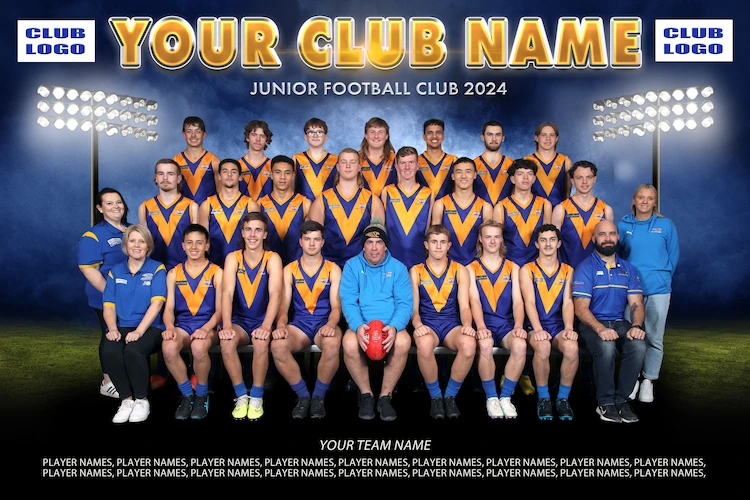
The session flow that keeps athletes comfortable
Team portraits fail when the session feels slow or uncertain. Athletes are used to drills with clear cues, quick transitions, and a sense of purpose. A photography session needs a similar structure. Players want to know what is happening next, how long it will take, and whether they can move normally or must stay perfectly still.
A smooth workflow also protects consistency across the team. If one half of the group gets coached properly and the other half does not, you end up with uneven expressions and mismatched posture. The goal is to give every athlete the same opportunity to look confident.
What that looks like in real sessions varies by sport and age group, but the principles are stable:
- warm-up and positioning happen quickly
- coaching is brief and specific, not vague
- the photographer directs enough to create shape, but not so much that players stop being themselves
I like to build momentum early. Start with the group frame while everyone is fresh, capture a few variations quickly, then move into tighter portraits and optional individual or pairings if the club wants them. That order keeps energy up and reduces the “we have done this already” fatigue.
Clothing, kit, and small details that change the portrait
Sport kit is not designed to be photographed in studio conditions. Logos, fabric textures, and reflective trim can behave unpredictably under direct light. Eyewear, facial hair grooming habits, and even hair products can matter more than people expect.
From experience, the best results come from handling kit details with honesty and practicality: If the kit has reflective piping, you may need an angle shift to avoid hotspots. If the fabric shows wrinkles after a warm-up, a quick adjustment before the camera comes out helps. If socks or shorts sit differently after team stretching, minor tweaks improve uniformity.
You do not need players to overthink it. You need them to look like they just stepped out of training, not like they just got styled for a magazine cover. That is the difference between a portrait that feels authentic and one that feels staged.
If the club is purchasing new uniforms, schedule portraits right after kit collection and alterations, when the fit is finalized. It is frustrating to retake because one sleeve sits wrong or the jersey pulls at the shoulder.
Directing expressions without killing the vibe
Athletes are tough on themselves. They notice every squint and every moment they feel they looked awkward. If you wait for “perfect” expressions, you will get long pauses and shaky results.
A sports photographer does better when they direct with intention and keep the expression natural. Instead of saying “smile more,” I often give cues tied to what the team is doing. That could be something as simple as asking them to look at a teammate they trust, or to hold a pose like they are about to celebrate a play they are proud of.
Coaches can help a lot here, but their involvement should be targeted. If a coach talks too much during posing, players can lose their focus. Short, supportive prompts work best. The photographer should lead the flow, and the coach should reinforce confidence.
I also pay attention to age and comfort. Junior teams often need a little extra patience, especially with shy players or those who do not like having their body arranged in a specific way. With teenagers, you can push the energy slightly more, but respect still matters. Give them control where you can, like letting them choose between two stance options.
Group composition: the part that determines whether the photo looks balanced
You can have beautiful individual portraits and still end up with a group shot that feels off. That usually comes down to composition: height differences, spacing, and how shoulders line up.
A strong approach is to build structure before the clickfest begins. For a team portrait, you want: Clear sightlines for faces A consistent row shape Enough spacing so players are not squashed or overlapping visually
I will often test two or three arrangement options quickly. Sometimes a slight shift in a front row position makes the whole group feel more even. If you photograph sports teams often, you develop a sense for how small adjustments change the final image.
This is also where the photographer earns trust. Players notice when someone takes a moment to get the arrangement right, even if it costs a couple of minutes. Coaches notice too, because the group shot is a staple for club identity.
Why local expertise matters more than fancy gear
People sometimes assume a “sports photographer” just needs a high-end camera. Equipment matters, but the day is still won by judgment. Local experience in Melbourne helps with timing, scouting, and understanding venues.
A photographer who knows Melbourne can anticipate common challenges: Where the wind will hit on an open oval. How shade moves across the field by mid-afternoon. What backgrounds look messy on camera but seem fine with your eyes.
Those details are not glamorous, but they impact the final set of images. Local knowledge also speeds up decision-making. If a session runs behind schedule, you cannot afford to guess. You need options ready.
When I shoot Melbourne Sports Team Portraits, I think about the club’s real workflow. Will parents want to purchase prints and digital files the same week? Does the team need the images for social media within days? Is there a sponsorship deadline? When those constraints are clear, you can plan the shoot structure accordingly.
The deliverables clubs actually need
Every club is different, but most want a mix of images that cover multiple uses. A typical set might include a hero group photo plus variations, alongside tighter portraits for player profiles. Some teams add individual images, while others focus on group identity because the squad photos are the priority.
If your club has a designer or social media manager, coordination helps. Ask whether they need: Square crops for social platforms Wide versions for newsletters or sponsor boards Consistent colour grading across the entire gallery so the feed looks cohesive
The more you plan this up front, the smoother the delivery.
A practical checklist for a successful sports team portrait day
Clubs often do not have time to treat portraits like a separate event. They need a straightforward plan that fits into training schedules, match commitments, and travel.
Here is the kind of preparation that tends to make a real difference:
- Confirm the location and backup option for changing weather
- Decide the key group shots you must have before the session starts
- Ensure uniforms are final, clean, and fitted the way players will wear them on game day
- Assign a point of contact who can quickly gather players and keep the group on schedule
- Share any image usage needs, like team website deadlines or sponsor requirements
That last item sounds small, but it prevents frustration later when someone realizes they need images in specific sizes or formats.
Handling large squads, substitutions, and late arrivals
Team portraits rarely behave like a controlled studio session. Players will arrive late, someone will get pulled into a warm-up block, and a substitute may show up after you start shooting. If you try Click here to find out more to “wait for everyone,” you will lose the best light and the best expressions.
A sports photographer plans for interruptions. Sometimes that means building the session in segments so the essential shots still happen even if one group runs behind. For example, you might capture the main group frame early, then swap in remaining players for a second variation.
The second group frame is not a compromise. It is often the best way sports photographer to get everyone included without rushing the whole squad. You can also create a stronger final gallery because you have choices, not just one shot you had to hope for.
The key is keeping communication tight. If a player arrives while you are mid-shoot, you need a system to integrate them without derailing the lineup. That requires direction, timing cues, and a willingness to adjust.
Capturing motion without turning portraits into action blur
Some clubs want an energetic look, not just a posed lineup. That is where “sports photographer” becomes more than a label. Motion can be photographed beautifully, but it has to be intentional. Otherwise you end up with faces that are soft or expressions that do not match the sharpness of the kit.
For motion style portraits, I treat the session like a set of short bursts, not a long sequence. We might do one or two quick action prompts, then return to a stable pose for the hero images. This keeps the gallery balanced, giving you both the identity shot and the high-energy frame.
Motion requests are more common for: Younger teams who want something playful Teams launching new sponsorships who want standout visuals Players who love highlight-style imagery
Even then, you still need a few calm portraits. Coaches want something they can print. Parents want something their child can recognize as “them,” not as a blur.
Choosing between outdoor and indoor portraits in Melbourne
The decision is rarely just about weather. It is about the look your club wants and what you can realistically manage with your schedule.
Outdoor portraits often deliver a natural feel and flattering light, especially around certain times of day when shadows soften. Indoor portraits can be consistent and controlled, and they work well when you cannot depend on weather or when you need to shoot after school or at night.
When you are deciding, look at these practical considerations:
- how long players can realistically pause training for photos
- whether the venue has clean sightlines and a uncluttered background
- what lighting conditions you can count on
- how the kit looks in that setting, especially colours and any reflective trims
You might end up choosing based on logistics, and that is fine. A good sports photographer can produce strong results in either environment, as long as the plan is realistic.
Communication with coaches, parents, and the athletes
The day goes better when roles are clear. Coaches know team identity, hierarchy, and readiness. Parents often help with punctuality and bringing players together. Athletes just need a calm presence and instructions that do not feel complicated.
I prefer to keep communication simple and consistent. One point of contact, quick check-ins, and clear direction on where players should be when it is time to shoot. When parents crowd too close, it can distract younger athletes, so it helps to set a boundary.
If your club runs multiple teams on the same day, you also need a schedule that respects each group. Nobody wants a teammate to miss their turn because another squad took too long.
Two things that separate “average” from “collectible” portraits
Clubs often ask for “the best photos,” but the difference usually comes down to two factors.
First is direction. A photographer can take a technically correct shot that feels flat if they do not guide posture, spacing, and expression. A skilled photographer reduces awkwardness by giving players something to do with their bodies, not just their faces.
Second is curation. A photographer can shoot hundreds of frames, but the final gallery still needs consistency. The colours should match across images. The sharpness should be reliable on faces. The set should tell a story, from the team hero image to the more intimate portraits.
That curation step is where local photographers who understand Melbourne clubs stand out. They know what coaches will print, what players will share, and what families will expect as a keepsake.
Common mistakes clubs make before portraits
Some issues are fixable on the day. Others are hard to recover from, especially with changing light and tight schedules.
The most common avoidable problems I see include: Players arriving in the wrong kit configuration, like mismatched layers or missing accessories No one confirming who is in the group until the last minute Too many “extra” ideas added mid-session, which can stretch the schedule beyond what light allows Choosing a location without checking the background from the camera position, not just from where people stand
If you want a smooth shoot, lock the essentials early, and keep the “extras” limited to what fits within the time window.
What it feels like on the day, from an athlete’s perspective
This is the part people forget when they hire photographers. The final images matter, but the experience matters too, especially for junior athletes.
When the session is run well, players feel seen. They get coached briefly, not overwhelmed. They see the photographer move efficiently, and they learn how to get into the pose quickly. They can laugh between shots. They know the camera is capturing them, not turning them into a project.
I have watched teams get better over the session as they relax. Early frames sometimes have nervous energy. Later frames show confidence. That progression is real, and it is one reason why pacing matters. If you rush too hard, you do not give players time to settle. If you drag it out, you exhaust them.
The best portraits happen when the session feels like it has purpose, but also breathing room.
Pricing and budgeting considerations, without the guesswork
Clubs often ask about cost, but the price should reflect what you are actually getting: number of images, usage rights if needed, turnaround time, and whether individual portraits are included.
A cheap shoot can turn expensive if you end up needing retakes because the squad composition was wrong or the delivered images were not aligned to what sponsors and media teams require. A higher-quality session can save money by delivering a gallery that is usable immediately.
If you are comparing options, ask practical questions early: How many deliverables are included per player, if individual portraits are part of the package? What is the turnaround time for the gallery? Are edits consistent across the full team set? Is there a reshoot policy if weather or venue issues disrupt the plan?
This is not about being difficult. It is about ensuring the portrait day supports the club’s real needs.
Final thoughts for Melbourne clubs planning Sports Team Portraits
Sports Team Portraits Melbourne is ultimately about identity. It is the visual record of a season, and it becomes part of how athletes remember what they built together. The photographer you choose influences not only image quality, but also how confident players feel in front of the camera.
Look for someone who understands local light and local logistics, who can direct without making the session stiff, and who brings an organized workflow to handle large squads and shifting schedules. With that foundation, the portraits do more than look good on a phone screen. They hold up on printed team boards, in yearbooks, and in the sponsor materials that help keep community sport alive.
If you are planning Melbourne Sports Team Portraits, build the day around what athletes need: clear instructions, a calm pace, and a plan that accounts for the weather. A local photographer melbourne based will bring the practical experience that makes all the difference when the session is moving, the sky is changing, and every player deserves their moment.
Pure Sport Images
23 Grandview Ave, Mulgrave VIC 3170, Australia
+61 413 157 614
[email protected]
Website: https://puresportimages.com.au/